 6 months ago
Introduction
Agriculture, one of the oldest and most fundamental human activities, is experiencing a significant transformation in the 21st century. Technological advancements are reshaping how food is produced, managed, and distributed on a global scale. This shift is not only improving efficiency and sustainability but also creating new employment opportunities in sectors that were previously non-existent. The integration of cutting-edge technologies is revolutionizing traditional farming methods, enabling farmers to meet the growing demands of a rapidly increasing global population while addressing environmental concerns. This article explores the evolving landscape of agriculture, the pivotal role of technology in this change, and the broad implications for the workforce and economy worldwide.
Context: The Traditional Agricultural Landscape
Historically, agriculture has been a labor-intensive sector, relying heavily on manual labor and traditional farming techniques passed down through generations. It has served as the backbone of many economies, particularly in developing countries where a significant portion of the population depends on farming for their livelihoods. Despite its importance, the sector has faced numerous challenges, including low productivity, environmental degradation, soil depletion, and vulnerability to climate change impacts such as droughts and floods. These challenges have often limited the ability of farmers to increase yields sustainably.
Moreover, the global population growth and the consequent rise in food demand have placed additional pressure on agricultural systems to produce more with fewer resources. In many regions, farming remains a primary source of employment, but the nature of agricultural jobs has been evolving. Mechanization, which began several decades ago, reduced the need for manual labor but also displaced some workers, leading to shifts in rural employment patterns. However, the recent wave of digital and biotechnological innovations is accelerating this transformation at an unprecedented pace, fundamentally altering the agricultural landscape and labor market.
The Core: How Technology is Transforming Agriculture
Precision Agriculture and Smart Farming
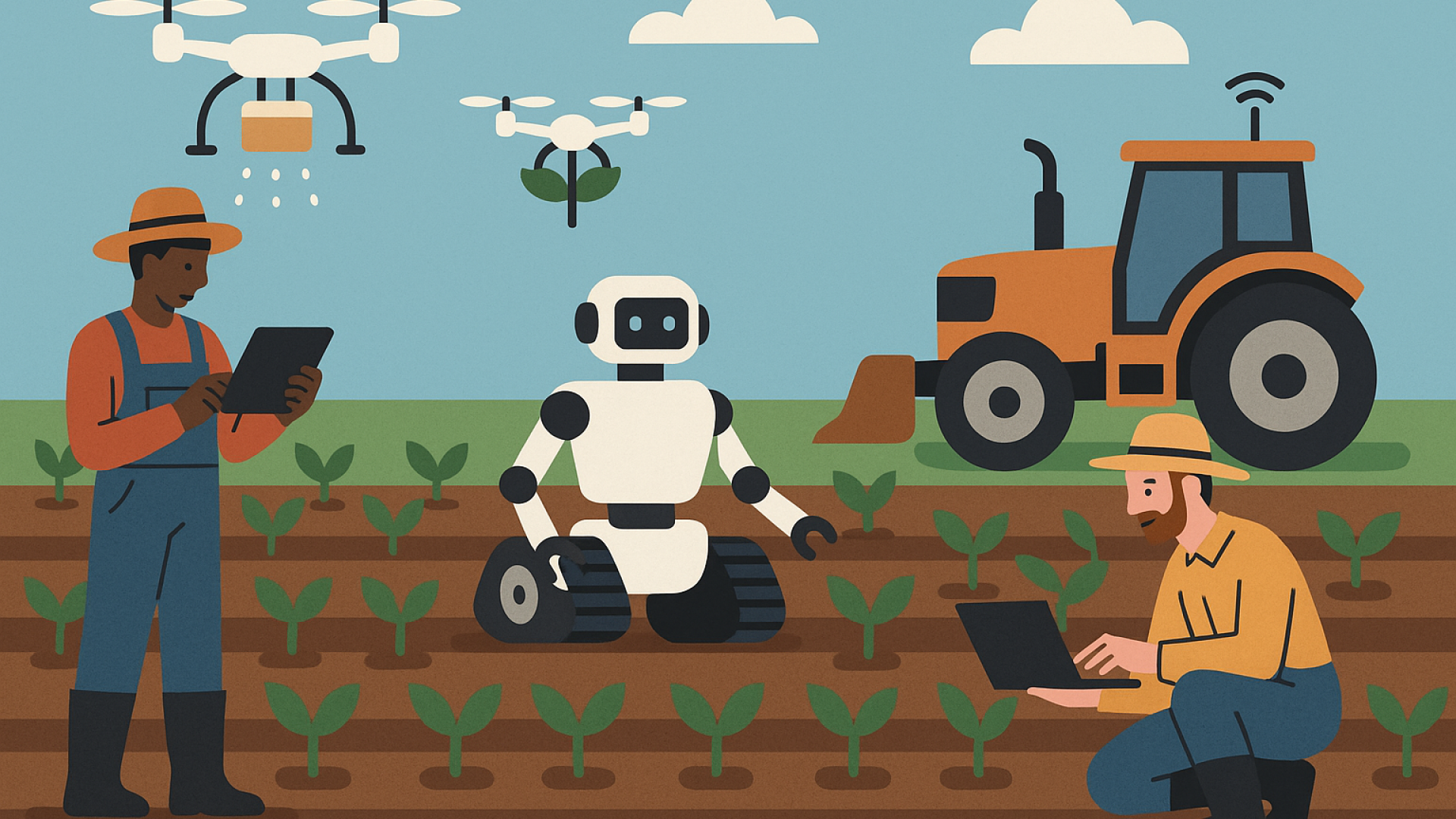
Precision agriculture represents a paradigm shift in farming practices by leveraging data analytics, GPS technology, sensors, and drones to monitor and optimize crop production with remarkable accuracy. This approach allows farmers to apply water, fertilizers, and pesticides more efficiently, minimizing waste and reducing environmental impact. For example, soil sensors can detect nutrient deficiencies in real-time, enabling targeted interventions that improve crop health and yield. The adoption of these technologies requires a workforce skilled in managing and interpreting complex data, maintaining sophisticated equipment, and implementing digital tools effectively. Consequently, new roles such as data analysts, agronomists specializing in digital agriculture, and drone operators are emerging within the sector.
Automation and Robotics
The integration of robots and automated machinery into agriculture is transforming labor-intensive tasks such as planting, harvesting, and sorting crops. These machines not only enhance productivity by operating continuously and precisely but also reduce the physical strain on workers, improving workplace safety and efficiency. Agricultural robots equipped with artificial intelligence (AI) can identify and remove weeds, monitor crop health, and even perform selective harvesting, tasks that traditionally required significant manual effort. This technological evolution is creating demand for engineers, technicians, and operators trained in robotics, AI systems, and machine maintenance, thereby expanding the skill set required in the agricultural workforce.
Biotechnology and Genetic Engineering
Advances in biotechnology have led to the development of genetically modified crops that exhibit enhanced resistance to pests, diseases, and climate stresses such as drought and extreme temperatures. These innovations contribute to higher yields and reduced reliance on chemical inputs, promoting more sustainable farming practices. The field of biotechnology in agriculture encompasses molecular biology, genetics, and bioinformatics, opening new career paths in agricultural research and development. Scientists and technicians working in this area are involved in developing new crop varieties, conducting field trials, and ensuring regulatory compliance, thereby bridging the gap between laboratory research and practical farming applications.
Supply Chain and Food Technology
Technology is also revolutionizing the agricultural supply chain, enhancing food safety, reducing losses, and improving traceability from farm to table. Blockchain technology is being employed to create transparent and tamper-proof records of food origin and handling, which boosts consumer confidence and facilitates compliance with safety standards. Artificial intelligence is used for demand forecasting, enabling better inventory management and reducing waste. Additionally, Internet of Things (IoT) devices monitor cold chain logistics to maintain optimal storage conditions for perishable goods. These advancements generate new employment opportunities in logistics, data management, quality control, and supply chain analytics, requiring a blend of agricultural knowledge and technological expertise.
Solutions: Preparing the Workforce for the Future of Agriculture
Education and Training
To fully harness the benefits of technological advancements in agriculture, education systems worldwide must adapt by incorporating agricultural technology, data science, and sustainability principles into their curricula. This includes not only formal education at universities and technical institutes but also vocational training and continuous learning programs tailored for farmers and agricultural workers. Such programs can equip individuals with the necessary skills to operate new technologies, interpret data, and implement innovative farming practices effectively. Furthermore, fostering partnerships between educational institutions, technology providers, and agricultural communities can facilitate knowledge transfer and practical training, ensuring that the workforce remains agile and capable of meeting evolving industry demands.
Policy and Investment
Governments and private sectors play a crucial role in supporting the adoption of technology in agriculture through strategic investments and policy frameworks. Investing in rural infrastructure such as reliable internet connectivity, electricity, and transportation networks is essential to enable access to digital tools and markets. Additionally, funding research and innovation initiatives can accelerate the development of locally adapted technologies. Policies that encourage public-private partnerships, provide subsidies or tax incentives for technology-driven farming, and protect intellectual property rights can create an enabling environment for technological progress. Such measures not only facilitate the transition to modern agriculture but also stimulate economic growth and job creation in rural areas.
Inclusive Growth
Ensuring that the benefits of technological progress in agriculture are equitably distributed is vital for inclusive growth and poverty reduction. Smallholder farmers and rural communities often face barriers such as limited access to affordable technology, credit, and extension services. Addressing these challenges requires targeted interventions, including microfinance programs, cooperative models, and mobile-based advisory services that provide timely information and support. Empowering women and marginalized groups through tailored training and access to resources can further enhance social equity and productivity. By bridging the digital divide and fostering inclusive participation, societies can promote sustainable development and resilience in the agricultural sector.
Conclusion
The integration of technology in agriculture is transforming the sector into a more efficient, sustainable, and innovative industry. This profound change is creating new job opportunities that require a blend of traditional agricultural knowledge and modern technical skills, ranging from data analysis and robotics operation to biotechnology research and supply chain management. By investing in education, infrastructure, and inclusive policies, societies can ensure that the agricultural workforce is well-prepared for the future. Such preparedness is essential not only for enhancing food security but also for driving economic growth, reducing poverty, and promoting environmental stewardship worldwide. As agriculture continues to evolve, embracing technological innovation will be key to meeting the challenges of the 21st century and beyond.